Rust cheats explained through a private cheat menu showcase that shows what ESP, aimbot and customization actually look like in a live server
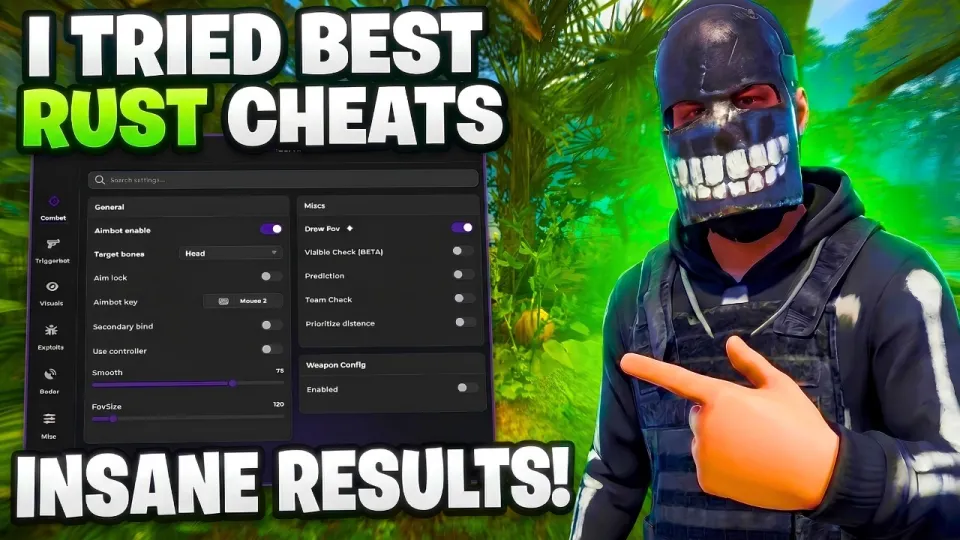
Video: I Secretly Used Rust Cheat To Dominate Everyone In The Server...(INSANE)
· based on the channel yqzkqrv
Key takeaways
- The showcase features the ZALIANT Private Rust Cheat, sold through zaliantservices.com with a dedicated product page and Discord community.
- The video is split into four chapters: intro and menu showcase, features overview, gameplay showcase, and a final review.
- Typical Rust cheat modules include ESP (player, loot and container tracking), aimbot with smoothing and FOV limits, and recoil control.
- Rust runs Easy Anti-Cheat plus Facepunch's own server-side and client-side detection, so any cheat carries a ban risk on official servers.
- Private cheats are usually priced higher than public ones and are sold in limited user counts to slow signature detection.
Rust cheats are third-party software add-ons that inject into the game client to expose information the base game hides (player positions, loot, stash contents) and to automate aiming or recoil compensation; the most recent public example is a showcase of the ZALIANT Private Rust Cheat, available on the ZALIANT product page, which walks through the menu, its modules and live gameplay on a populated server. That showcase is useful less as an advertisement and more as a map of what modern cheat software actually contains, how it is configured, and where the real risks sit.
What a Rust cheat menu actually contains
A modern Rust cheat is not a single toggle but a modular overlay, usually opened with an insert or function key, split into tabs for visuals, aiming, movement and miscellaneous utilities. In the ZALIANT showcase the presenter spends the opening section on the interface itself before touching gameplay, which is standard practice: the menu is the product. The core categories you will see in almost any paid Rust cheat are:
- ESP / wallhack — draws boxes, skeletons, names, health bars, held weapons and distance readouts through walls. Loot ESP extends this to crates, dropped bags, airdrops, tool cupboards and stashes.
- Aimbot — target selection by closest-to-crosshair, FOV or visibility, with smoothing, humanization and per-weapon bone priority (head, chest, nearest visible point).
- Recoil and spread control — scripted pattern compensation for weapons like the AK-47, LR-300 and MP5, often with per-gun strength sliders.
- Movement and utility — silent aim variants, no-sway, fast loot, instant craft toggles, hit sounds, and projectile prediction for bows and bolty shots.
- Config system — saveable profiles, hotkeys per module and a stream-proof overlay so the menu does not appear in captures.
The features overview in the showcase runs through these tabs quickly, which is typical: the interesting information is in the sliders, not the checkboxes.
How the settings separate a subtle cheat from an obvious one
The first sentence of any honest conversation about Rust cheats is that configuration matters more than the feature list, because the same software can look like a professional player or a blatant cheater depending on three numbers. Aimbot FOV is the most important: a value around 3–8 degrees at the crosshair looks like strong aim, while a 180-degree silent aim snaps in ways no human hand produces. Smoothing (often expressed as a value from 1 to 20, where higher is slower) controls how long the crosshair takes to travel to the target, and bone priority decides whether you hit heads constantly or occasionally. ESP settings carry the same logic: full skeleton plus name plus health plus distance on every player on the map is a giveaway in a clip, whereas a box and distance limit of 150–200 meters is far harder to spot.
Recoil control values are usually tuned per weapon and per attachment, because the AK-47 pattern with a muzzle brake differs from the same gun with a laser sight. The showcase's gameplay segment is short, roughly forty seconds of footage after the menu tour, which is itself informative: a private cheat's selling point is that nothing dramatic happens on screen.
Private versus public Rust cheats
The distinction that matters commercially is private against public. Public cheats are sold to anyone, cost less, and are the first to be signatured by anti-cheat updates because thousands of users run identical binaries. Private cheats like the one in the showcase are sold in limited quantities, often through a Discord, with manual key delivery and periodic reworks after detection waves. That model justifies a higher price and a shorter feature list, because the vendor's real job is keeping the injection method undetected rather than adding modules. Buyers should read the product page carefully for what is actually included: lifetime or subscription access, HWID reset policy, supported Windows versions and whether the cheat requires a specific game launch order.
Detection risk and what a ban costs in Rust
Rust is protected by Easy Anti-Cheat at the client level plus Facepunch's own server-side analytics, and bans are applied to the game account, not just the session. A Rust account ban is unusually expensive compared with other shooters because progress is tied to the account: blueprints, skins and hours are lost, and the game is a paid title. Server owners on community and modded servers run their own plugins and manual review, so a cheat that survives official servers can still get you removed from a popular community server within a day. There is no version of this software that carries zero risk, and the showcase format, which lasts a few minutes, cannot demonstrate long-term undetected status. Anyone evaluating Rust hacks should treat any claim of permanent safety as marketing rather than a guarantee.
How to evaluate a Rust cheat showcase before buying
A showcase video is a sales asset, so judge it on what it does not show. Useful checks, in order:
- Length of real gameplay — a full raid or a thirty-minute session tells you more than a montage; the ZALIANT clip devotes about a minute to gameplay in total.
- Menu depth — count the actual sliders and per-weapon profiles; a real private cheat has dozens of configurable values.
- Vendor history — a Discord with public ban reports, update logs and dated reworks is a better signal than a testimonial page.
- Payment and support terms — look for clear refund policy statements, HWID reset rules and update frequency.
- Community feedback — search the vendor name alongside "ban" and "detected" before paying anything.
The channel yqzkqrv presents this particular clip as an interface and settings walkthrough rather than a proof of safety, and that framing is the honest one to keep in mind.
Where to find the software shown in the video
All links from the showcase, copied exactly:
- Product page: https://www.zaliantservices.com/products/rustprivate
- Store front: https://www.zaliantservices.com
- Discord community: https://discord.gg/zaliant
Summary
Rust cheats in 2026 are modular tools built around ESP, aimbot and recoil control, and the ZALIANT Private Rust Cheat showcase demonstrates that the menu and its settings are the product rather than the gameplay footage. Configuration values such as aimbot FOV, smoothing and ESP distance determine whether the software looks subtle or blatant, and private distribution mainly buys a slower detection cycle, not immunity. The cost of a mistake is high in Rust because bans hit a paid account with blueprints and skins attached. The video breakdown by the channel yqzkqrv is a reasonable introduction to how these menus are structured; if you want the exact build shown, the ZALIANT Private Rust Cheat page is where the vendor lists it.
Questions & answers
What features do Rust cheats usually include?
Most paid Rust cheats combine ESP or wallhack for players and loot, an aimbot with adjustable FOV, smoothing and bone priority, and recoil or spread control tuned per weapon. Extras commonly include stash and crate ESP, projectile prediction, fast loot toggles and a stream-proof menu overlay with saveable configs.
Are Rust cheats undetected?
No cheat can honestly promise permanent undetected status. Rust uses Easy Anti-Cheat plus Facepunch's own analytics, and detection waves regularly hit both public and private software. Private cheats are sold in smaller numbers to delay signature detection, but the risk of an account ban always remains.
What is the difference between private and public Rust cheats?
Public cheats are cheap and sold to unlimited users, which makes their binaries easy to signature. Private cheats like the ZALIANT build shown in the video are distributed in limited quantities through a Discord, cost more, and are updated after detection waves, with the trade-off of a smaller feature list.
What happens if you get banned for cheating in Rust?
The ban applies to the game account, so you lose blueprints, skins, hours and access to official servers, and the game itself is a paid purchase. Community and modded servers also run their own plugins and manual review, so a ban there can come even faster than on official servers.
Source: I Secretly Used Rust Cheat To Dominate Everyone In The Server...(INSANE) · Markdown version